
Photo by Alex Bierwagen on Unsplash.
“End the Fed” may be more popular now than ever. Representative Thomas Massie just introduced H.R. 1846 which would repeal the Federal Reserve Act – the 1913 law that created the Federal Reserve System.
The goal of the “End the Fed” movement is to reduce inflation. I don’t want to spend too much time talking about inflation here, but in case you were wondering what I think of it, let me just say the following: God made man upright, but man has sought out many schemes. Few schemes are worse than inflation – an under-handed, massive, institutionalized form of theft. The Imprecatory Psalms were written for schemes like this.
But let’s move on to the topic at hand. Would ending the Fed accomplish the goal of reducing inflation?
When you receive your paycheck via Direct Deposit, it’s unlikely that your bank is the same bank that your employer uses, so how does the money get from your employer’s bank to your bank? It goes through the Federal Reserve via a service called FedACH. What about wire transfers – how does the money get from one bank to another? It goes through a service called Fedwire, also operated by the Federal Reserve. If a bank here in Staunton VA is running low on twenty-dollar bills (US$20), what do they do? They notify their local Federal Reserve bank in Richmond VA, which sends out an armored truck to the rescue.
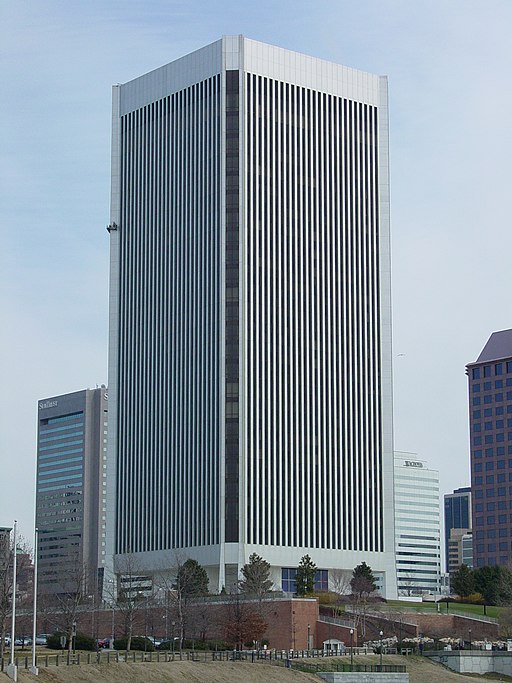
Federal Reserve Bank, Richmond, Virginia
Photo by Ben Schumin, CC BY-SA 3.0, via Wikimedia Commons.
If the Fed were to end, would these services cease? Of course not, because that would cause a shutdown of the entire U.S. banking system. Not even Congressmen would be able to get paid. If you read Rep. Massie’s four-page PDF constituting the text of the bill, it says nothing about these particular services, but it does say the Fed’s assets and liabilities are to be assumed by the Secretary of the Treasury, which to me just means the Treasury will provide the services that the Fed used to provide, or will delegate those services to a new agency, bureau, etc.
But I want to give Rep. Massie, Sen. Lee, and the other cosponsors the benefit of the doubt and assume the best – that the Treasury would be a much better steward going forward than the Fed has been.
Murray Rothbard’s 2-step process to fixing the U.S. banking system is:
- put the U.S. dollar back on the gold standard
- eliminate fractional-reserve banking
Let’s assume the bill passes and let’s assume the Treasury is a big fan of Austrian economics. They wear T-Shirts saying “Murray Rothbard is My Homeboy”. They regularly bow in the direction of Auburn, Alabama. They are all fired-up and ready to tackle step #1. So they define the U.S. dollar to be something like 1/2900th of a troy ounce of gold – making $2900 equal to 1 troy ounce of gold (roughly the current gold price at the time of writing). Why would anyone believe they aren’t going to change it in the future? We’ve seen this trick before. The U.S. dollar used to be defined as 1/20th of a troy oz, then they changed it to 1/35th. What could they possibly do to demonstrate that it wouldn’t be changed again? Hammer it into Plymouth Rock? Engrave it on George Washington’s forehead at Mount Rushmore? Rearrange the Appalachian Mountains to be a giant pixelation of “1/2900th”? There is nothing on God’s green Earth (or Elon’s red Mars) that they could possibly do to convince me that they won’t just change it later. At the next war? At the next pandemic?
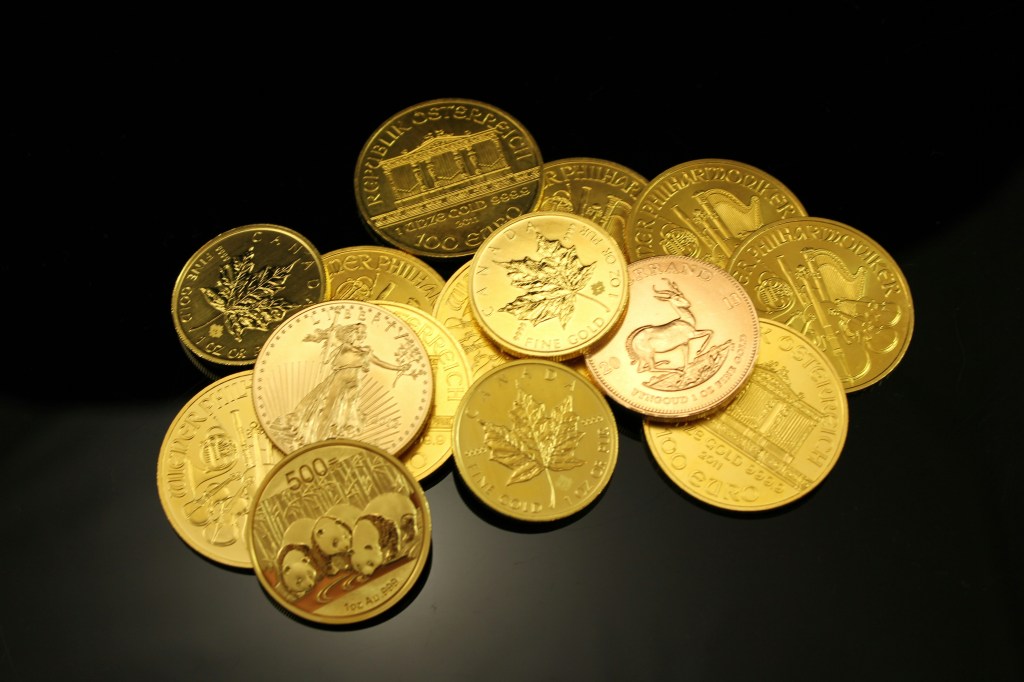
The U.S. dollar can’t be placed back on the gold standard, because the U.S. dollar isn’t gold. A paper receipt for gold – even if it’s redeemable in gold – isn’t itself gold, because the receipt can be redefined. Pure information is even worse than paper. Software is soft, it can be changed. Gold is unique, accept no imitations or representations. The only honest way to pay somebody is to hand them gold. Is the laborer worthy of his wages? Then he should be paid with gold.
How would Elon Musk End the Fed?
I’m not talking here of Elon the DOGE slasher, or Elon the flame-thrower (which was just a gimmick to raise money) or Elon the cryptocurrency maker (which was just a mockery of the entire crypto industry), I’m talking about Elon the problem solver, the reasoner from first principles. When he wanted to go to Mars he chose not to build upon NASA, but instead go around it. When he wanted to design an electric car, he chose not to base it on an existing Lotus chassis, that’s “super dumb”, he went around it – he built a factory where raw materials come in one end and finished cars go out the other. Reason from first principles, all the way down to the basic physics, then build up from there. How would Elon Musk fix the current banking system? By going completely around it.
A completely new banking system
If we are reasoning from first principles, our new banking system would not be constrained by existing concepts. We need a currency, but we are not constraining ourselves to use the existing U.S. dollar, so let’s use the best possible currency as the cornerstone of our new banking system. Is pure information better than paper currency, or is it much much worse? (I’ll tackle cryptocurrencies in future posts, but the short answer is that gold is the premier currency and the ultimate means of payment). We want a payment system, but not based on paper checks or overnight batch processes. The payment system should show account balances in troy oz of gold, not in some other denomination which can be redefined. All balances should be backed 100% by gold, and we should not allow any kind of fractional-reserve lending. The payment system should be optional since it’s no good during an extended power or Internet outage.
The payment system would store gold on behalf of its account holders, allowing them to deposit and withdraw physical coins. We need physical security for this system, but we also need transparency. Fort Knox has good security, but poor transparency. We need a vault, but it’s better not to put all our eggs in one basket, so we need a system of vaults and secure transportation between them. And we need audits, but not the Enron/Arthur Andersen type of audits; our audits should produce evidence directly available to the general public, perhaps even to the point of livestreaming, or inviting independent bloggers to participate in the audit. But we’ll have to find a way to protect the exact locations and identities of personnel, since organized crime isn’t completely gone.
Should we use above-ground vaults or below-ground vaults, or a combination of the two with the freedom to shift things around in response to new data? Should our vaults be inside the U.S. or outside the U.S., or a combination of the two with the freedom to shift things around in response to new data?
Should the payment system be mobile-only, or have both web and mobile user interfaces? What should the API look like? Should it be a real-time payment system, or should a person be able to make a payment but then call a few minutes later and have it canceled? What happens if a payment is made under duress? Should folks be able to deposit/withdraw through the postal service (like the large online gold bullion dealers), or do we need physical retail outlets all over the U.S.? Should our retail outlets be more like the 5,000+ JPMorgan Chase Bank branch buildings, or more like the 54 large Ikea outlets? Should each branch be its own legal entity, or just one overarching corporation? Drive-thru only, or drive-thru plus in-person? Should each branch have as many drive-thrus as Buc-ee’s has gas pumps? How can we secure the drive-thru experience? Can it be so secure that even armored trucks use it? What should the fees be? How should we deal with fraud? Insurance?
Now when this new banking system is up and running, what do we need the government to do? We need the government to govern, but we don’t need the government to change. The government should hold the new system responsible for any breach in its terms of service, but the Fed can stay just as it is, and the U.S. dollar just as it is. As more people voluntarily choose to use the new system, the old system will become more and more irrelevant, and will eventually die the horrible death that it deserves. What about paying taxes? If the government was smart, they would allow taxes to be paid in gold by opening their own account with the new system. But if they refuse, that’s ok, our system allows gold to be converted into U.S. dollars just prior to the paying of taxes.
Love your neighbor. Pay them with gold.
Why would people voluntarily use the new system? And doesn’t Gresham have a law saying they won’t? I’ll deal with Gresham’s Law in a follow up post, but the short answer is that it doesn’t apply. One of the benefits of reasoning from first principles is the opportunity to produce a service that is clearly superior to the alternatives. We started with the best currency, and step-by-step designed the best payment system reasonably possible. The only way an alternative can compete is if it was designed the same way – and the more the merrier when it comes to legit competition. But the current banking system was designed in 1913 by politicians and has been run by folks generally not at all concerned with serving their customers. The credit card network is just as bad. These systems are full of Jeffrey Epstein types, which makes them uncompetitive at best, criminal at worst.
People should want to pay each other in gold. If you do some work for me, I want to make sure you get paid. If I pay you in anything other than gold, I’m conferring an obligation upon you to fairly quickly convert it into something that doesn’t lose value over time, which I would have to factor in beforehand. So I want to pay you in gold. But even if this altruistic sentiment doesn’t resonate with others, they will still use the new system if it’s clearly superior.
The only way to end the Fed is to stop using the U.S. dollar
In summary, a grassroots movement – where people choose to pay each other in honest money, combined with a clearly superior payment system – will not only End the Fed, but will end the U.S. dollar, and inflation with it.

 Smithmont Blog

Leave a comment