
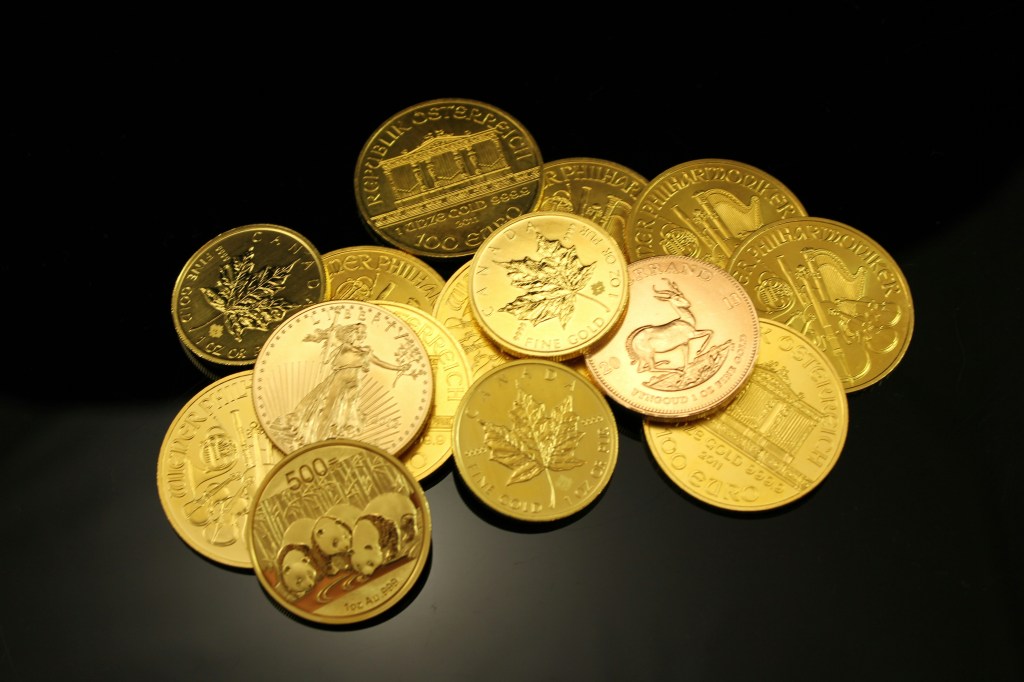
Photo by Zlaťáky.cz on Unsplash.
Gresham’s law states that bad money drives out good. If you have the option to pay for something with either a really valuable coin (good money) or a worthless coin (bad money), you would prefer to part with the worthless coin. The valuable coins would end up being hoarded and not circulated at all – hence bad money drives out good.
The U.S. dollar is bad money, gold is good money (the best actually), so how could gold ever be used as a currency again?
How bad is the U.S. dollar?
Just how bad is the U.S. dollar? One way to measure it is to look at inflation. The latest numbers from shadowstats.com show inflation at ~7.5% (if calculated the same way it was in 1990), or ~12% (if calculated the same way it was in 1980).
But inflation is not the whole story, because prices are supposed to be falling in a growing economy. How much is the economy growing? GDP gives us an idea. So % GDP should be added to the ~7.5% or the ~12%.
But the true measure of the weakness of the dollar is the price of gold. Gold is the monetary Polaris and the premier currency throughout world history. When gold goes up in dollars, it just means the dollar is going down.
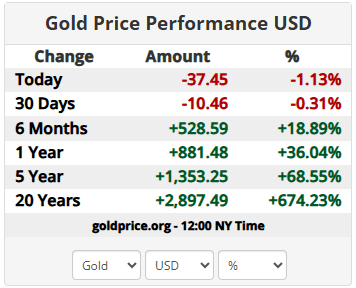
As of the time of writing, gold has gone up 674.23% over the last 20 years (according to goldprice.org), so 674.23% / 20 years = 33.7% per year, but we should remember to factor in the compounding effect, so (1 + 6.7423) ^ (1 / 20) – 1 = 10.8% per year.
The U.S. dollar may be better than other government currencies, but compared to gold, it’s bad.
Back to Gresham’s Law
The simple truth is that Gresham’s law doesn’t apply to the return of gold as a currency. Gresham’s law only applies when the government dictates that some kind of bad money is equal to some kind of good money. In 1965 the government declared that a 1965 quarter (containing no precious metals) shall be equal to a 1964 quarter (containing 90% silver). The cheap/bad quarters quickly circulated, while the precious/good quarters were hoarded. Even though the government may be telling everyone that the two quarters are both worth the same amount, smart people understand that copper plus nickel does not equal silver.
In other words, Gresham’s law only applies when the government is doing something stupid.
As the Roman Republic slowly vaulted upward during its long ascent, its currency advanced from bronze (aes signatum) to silver (denarius) to gold (aureus), demonstrating that Gresham’s law was not in effect.
Why use Good Currency?
If you pay someone in bad money/currency, you are conferring an obligation upon them – to fairly quickly convert it into something that doesn’t lose value over time.
At Smithmont, we advocate that people should pay each other in gold, precisely because it is good money. If you are a merchant, you should accept nothing less for your goods or services. If you are a laborer, you should accept nothing less for your labor.
There is another benefit that is less direct and harder to grasp, but extremely potent. When the U.S. dollar loses value, that value is not destroyed, it is transferred. This is known as the Cantillon Effect. Inflation is often referred to as a ‘hidden tax’, not just because it results in citizens having less purchasing power, but because that power is transferred to the government, making it more powerful than it otherwise would be. When it comes to resisting tyranny, as I’ve said elsewhere, bearing gold is every bit as potent as bearing arms.

 Smithmont Blog
Leave a comment